「手ぬぐい」を英語で紹介 / What is Tenugui?
eeom6002
えいごフロッグ

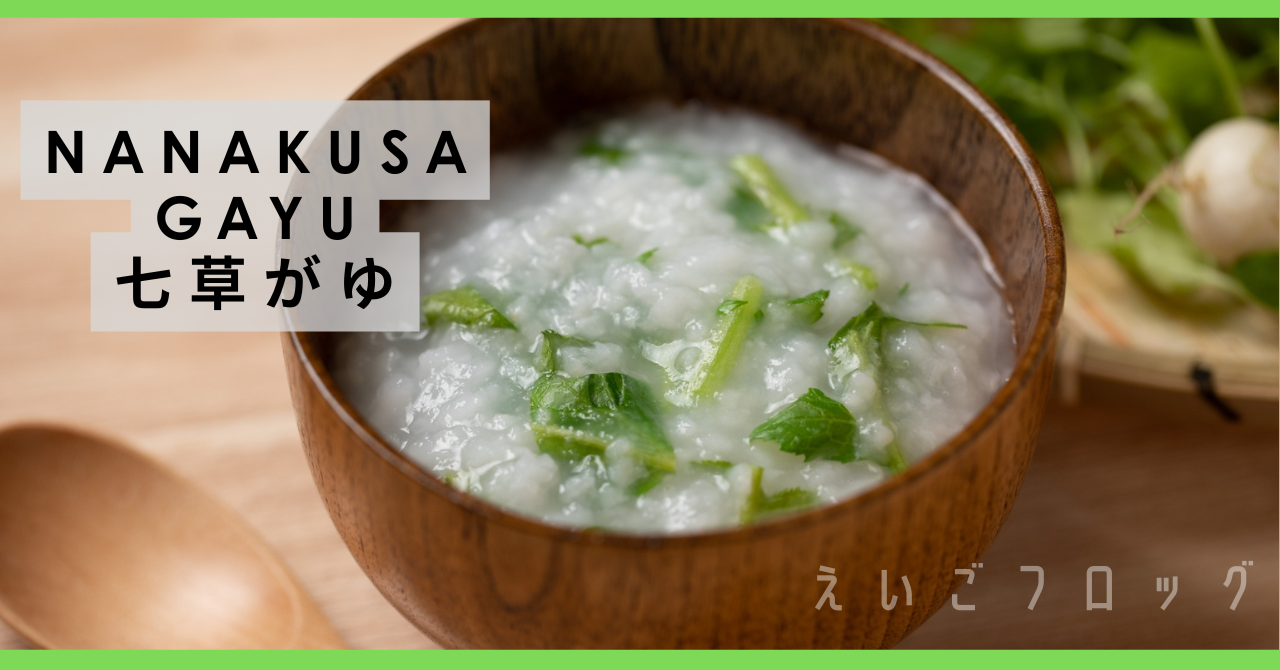
お正月を過ぎると、七草がゆの七草がスーパーなどの店頭に並びますね。フリーズドライのものも並んで、気がるに楽しめるようになりました。昔から続く風習について、英語で説明してみましょう。
After the New Year holidays are over, the seven herbs used for nanakusa-gayu start appearing in supermarkets. These days, freeze-dried sets are also widely available, making it easy for people to enjoy this traditional dish at home. Let’s take a closer look at this long-standing custom and explain it in English.
七草がゆは、日本のお正月が終わるころに食べられる伝統的な行事食です。1月7日に、春の七草を刻んで入れたシンプルなおかゆをいただくこの習慣は、ごちそう続きで疲れた胃を休め、無病息災を願う日本ならではの知恵と言えます。
‘Nanakusa-gayu’ is a traditional Japanese rice porridge eaten after the New Year celebrations. On January 7th, people eat this simple porridge made with seven spring herbs to rest their stomachs after holiday feasting and to pray for a healthy year ahead.
七草がゆは、七種類の野草を刻んで入れたおかゆです。使われる野草は「春の七草」と呼ばれ、それぞれ春の訪れを感じさせるものばかり。柔らかく炊いた米と共に、やさしい香りと味わいを楽しみます。
Nanakusa-gayu is a rice porridge made with seven kinds of spring herbs. These herbs, known as the “seven herbs of spring,” are believed to bring a taste of the season and gentle flavor to the dish. The warm porridge has a soothing, mild taste that’s perfect for early January.
七草がゆには、次の七種類の野草が使われます。これらの野草は、冬の終わりから春にかけて芽を出すもので、「冬を越えて力強く育つ生命の象徴」ともされてきました。
The seven herbs used in nanakusa-gayu include water dropwort, shepherd’s purse, cudweed, chickweed, nipplewort, turnip, and daikon radish. These plants sprout in late winter and early spring, symbolizing the return of life and energy after the cold season.
| 日本名 | 英語(一般名称) |
|---|---|
| せり | Water dropwort |
| なずな | Shepherd’s purse |
| ごぎょう | Cudweed |
| はこべら | Chickweed |
| ほとけのざ | Nipplewort |
| すずな | Turnip |
| すずしろ | Daikon radish |
1月7日は、日本の五節句のひとつ「人日の節句(じんじつのせっく)」で、古くから一年の健康を祈る日とされています。お正月はおせち料理や豪華な食事が続くため、質素なおかゆで胃腸を休めるという考えも根付いてきました。
January 7th is known as Jinjitsu no Sekku, one of the traditional five seasonal festivals in Japan. Long ago, people viewed this day as a time to pray for good health throughout the year. After days of rich New Year foods, eating plain porridge became a way to gently reset the body.
七草がゆのルーツは、中国の風習と日本古来の文化の融合にあります。古代中国では、1月7日に七種類の野菜を使ったスープを飲み、無病息災を願う「七種菜羹(しちしゅさいこう)」という習慣がありました。この考え方が日本に伝わり、年明けに芽吹く若草を摘んで生命力をいただく「若菜摘み(わかなつみ)」や、七種の穀物を炊く「七種粥」の風習と結びついていきます。
The roots of nanakusa-gayu lie in a blend of ancient Chinese customs and traditional Japanese culture. In ancient China, there was a custom of drinking a soup made with seven kinds of vegetables on January 7 to pray for good health, known as Seven Vegetable Soup. This idea was later introduced to Japan, where it blended with local traditions such as wakana-tsumi, the practice of picking young spring herbs, and the custom of cooking porridge with seven grains.
平安時代には宮中行事として行われ、江戸時代に「人日の節句」として定着したことで、現在のように、おかゆで胃腸をいたわりながら一年の健康を願う行事食へと形を変えていきました。
During the Heian period, it became a court ritual, and by the Edo period it had settled into the Jinjitsu Festival. Over time, it evolved into the nanakusa-gayu we know today—a gentle rice porridge eaten to rest the stomach and wish for good health in the year ahead.
七草がゆの味はとてもシンプルで、基本的には塩だけで味付けすることが多いです。その優しい味わいは、重たい食事のあとの体にぴったり。また、七草の香りや色合いを楽しむことで、季節の移り変わりを五感で感じることができます。
The flavor of nanakusa-gayu is very mild—often seasoned with just a bit of salt. Its gentle taste is perfect after the rich foods of New Year’s celebrations. The aroma and color of the herbs also help you experience the subtle shift into spring.
最近では、スーパーなどで春の七草セットが手に入りやすくなり、忙しい家庭でも気軽に七草がゆを作れるようになりました。また、だしや具材を少し変えてアレンジする家庭もあり、伝統を守りつつ楽しむスタイルが広がっています。
Today, you can easily find spring herb sets in stores, making it simple to prepare nanakusa-gayu at home. Some families add dashi broth or other ingredients to customize the dish, keeping the tradition alive in a modern way.
七草がゆは、特別なごちそうではありません。それでも、節目の日にやさしい一杯を味わいながら「今年の健康」を願うことには、日本らしい“行事を食べる文化”が詰まっています。もし1月初めに日本にいたら、ぜひこの季節の一杯を味わってみてください。
Nanakusa-gayu isn’t a luxury dish. Instead, it’s a humble bowl of porridge that carries a uniquely Japanese tradition: eating according to the seasons and life’s rhythms. If you’re in Japan in early January, give it a try and savor the gentle flavor and meaning behind it.