「天ぷら」を英語で紹介 / Introducing Tempura in English
eeom6002
えいごフロッグ

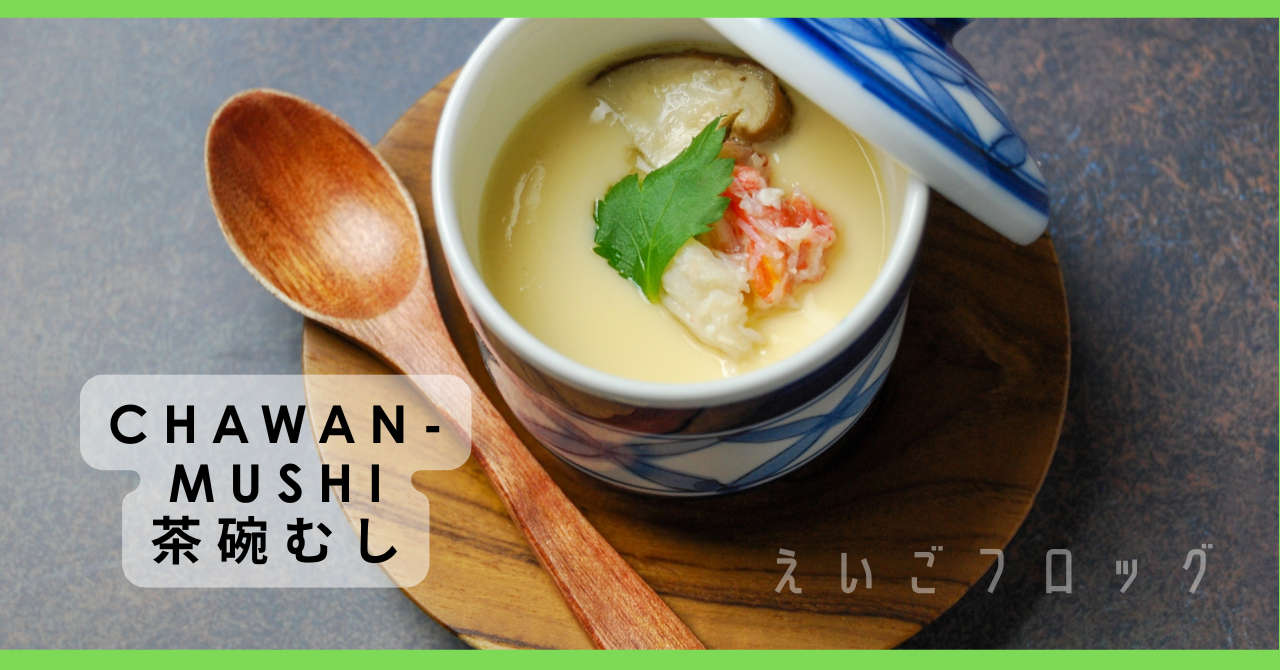
茶碗蒸しは、日本ならではの卵料理です。甘くも焼きもしない、だしのうま味を生かした蒸し料理で、そのなめらかな食感は初めて食べる人を驚かせます。小さな器に入れて提供される茶碗蒸しは、見た目は控えめですが、その中には日本料理の美学である「繊細さ」「バランス」「季節感」が詰まっています。
Chawanmushi is a uniquely Japanese egg dish. It is neither sweet nor fried, but a savory steamed custard that often surprises first-time diners with its silky texture. Served in a small cup, Chawanmushi may look simple, but it reflects the Japanese appreciation for subtlety, balance, and seasonality.
茶碗蒸しは、卵をだし(昆布やかつお節から取る和風だし)で溶き、低温でゆっくり蒸して作ります。そのため、豆腐やシルクのようになめらかな食感になります。オムレツやキッシュのように「卵そのもの」を主張する料理ではなく、香り・口当たり・余韻を楽しむ料理です。
Chawanmushi is made by gently mixing eggs with dashi, a Japanese broth made from kombu (kelp) and bonito flakes, and steaming it slowly at a low temperature. This careful method creates a texture often compared to silk or tofu. Unlike omelets or quiche, Chawanmushi focuses less on bold egg flavor and more on aroma, texture, and subtle umami.
「茶碗蒸し」という名前は、とても素直です。茶碗(chawan)は小さな器を意味し、蒸し(mushi)は蒸すことを表します。見た目やイメージよりも調理法をそのまま表すのは、日本料理によく見られる特徴です。
The name Chawanmushi is very straightforward. Chawan means a small bowl or cup, and mushi means to steam. This kind of honest, functional naming—focusing on how food is prepared rather than how it looks—is common in Japanese cuisine.
茶碗蒸しの楽しみの一つは、中に何が入っているか分からないワクワク感です。鶏肉、えび、しいたけ、かまぼこ、ぎんなんなどが代表的な具材で、具材が沈んだり、少し見えたりする様子も美しく、一口ごとに違う味や食感を楽しめます。
One of the pleasures of Chawanmushi is discovering what lies beneath the surface. Common ingredients include chicken, shrimp, shiitake mushrooms, fish cake, and ginkgo nuts. The way the ingredients sink or peek through the custard adds visual charm, and each spoonful offers a slightly different experience.
茶碗蒸しは、家庭料理としても、懐石料理の一品としても、寿司店での前菜としても楽しまれています。また、お祝いの席や季節の食事など、「おもてなし」の気持ちを込めて出されることも多い料理です。
Chawanmushi is enjoyed as a home-cooked comfort dish, as a refined course in kaiseki cuisine, and as an appetizer at sushi restaurants. It is also often served on special occasions, symbolizing care and hospitality toward guests.
茶碗蒸しの魅力は、「強すぎない」ことにあります。油っこくなく、重くなく、味が主張しすぎない一方で、だしのうま味、やさしい温かさ、心が落ち着く口当たりを楽しめます。そのため、子どもから高齢者、体調が優れないときまで、幅広い人に親しまれています。
The charm of Chawanmushi lies in what it doesn’t do. It is not oily, heavy, or overpowering, but instead offers gentle umami, comforting warmth, and a calming texture. Because of this, it is enjoyed by people of all ages and is known as a dish that is easy on the stomach.
伝統的な茶碗蒸しは甘くありませんが、地域によってはやや甘めの味付けが好まれることもあります。近年では、チーズや洋風だし、トリュフオイルなどを使った現代的なアレンジも登場しています。
Traditionally, Chawanmushi is savory, but in some regions a slightly sweeter seasoning is preferred. In recent years, modern variations using cheese, Western-style broths, or truffle oil have also appeared.
一見すると、茶碗蒸しはとても控えめな料理です。しかし日本料理では、控えめなものほど、技術と心配りが詰まっていると考えられています。茶碗蒸しは派手に主張する料理ではなく、ゆっくり味わい、静かな完成度を感じるための料理なのです。
At first glance, Chawanmushi may seem modest. In Japanese cuisine, modest dishes often contain the deepest craftsmanship. Chawanmushi does not demand attention—it invites you to slow down and appreciate quiet perfection.