「天ぷら」を英語で紹介 / Introducing Tempura in English
eeom6002
えいごフロッグ

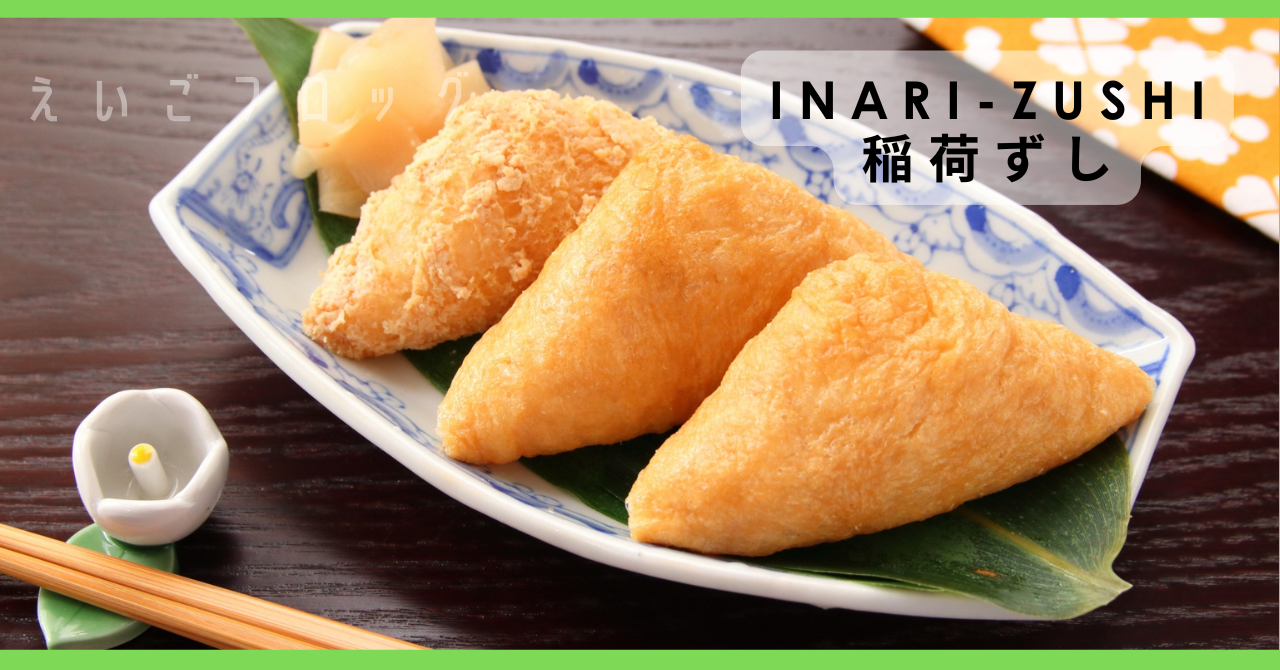
子どものころからとても身近な食べ物である稲荷ずし。家庭でも作られ、うどんのおともとして食卓に並ぶこともあります。稲荷ずし専門店があるほど、日本人の生活に深く根づいた食べ物です。
Inarizushi is a very familiar food to many Japanese people from childhood. It is often made at home and is sometimes eaten together with udon noodles. There are even specialty shops that sell only Inarizushi, showing how deeply this food is rooted in everyday Japanese life.
稲荷ずし(いなりずし) は、油揚げを甘辛く煮て袋状にしその中に酢飯を詰めたすしで、日本で広く親しまれている伝統的なすしの一種です。素朴でやさしい味わいが特徴で、魚を使わないすしとしても知られ、子どもから大人まで幅広い世代に親しまれています。
Inarizushi is a traditional type of sushi that is widely enjoyed in Japan. It is made by simmering deep-fried tofu in a sweet and savory sauce until it becomes pouch-shaped, then stuffing it with vinegared rice. It is known for its simple and gentle flavor, and because it does not use fish, it is enjoyed by a wide range of people, from children to adults.
油揚げを甘辛く煮る際には、しょうゆ、砂糖、みりん、だしなどが使われ、独特の甘みとうま味があります。
When the deep-fried tofu is simmered, ingredients such as soy sauce, sugar, mirin, and dashi are used. This gives the tofu its distinctive sweetness and rich umami flavor.
「稲荷ずし」という名前は、日本の神である 稲荷大神(いなりおおかみ) に由来しています。稲荷大神は、米や農業、五穀豊穣、商売繁盛の神として知られています。
The name Inarizushi comes from Inari Ōkami, a deity worshipped in Japan. Inari Ōkami is known as the god of rice, agriculture, good harvests, and business success.
稲荷ずしは、地域によって形や中身が少し異なります。
家庭ごとに味付けが異なるのも、稲荷ずしの特徴です。
Each household may have its own recipe, making Inarizushi a very personal dish.
稲荷ずしは、お弁当、ピクニック、お花見、行楽 など、さまざまな場面で食べられます。手で食べやすく、時間がたっても味が落ちにくいことから、外出先の食事に向いています。
Inarizushi is enjoyed on many occasions, such as in bento lunches, at picnics, and during cherry blossom viewing. Because it is easy to eat by hand and stays tasty even after some time, it is ideal for eating outdoors.
稲荷ずしの魅力は、甘い油揚げとさっぱりした酢飯の絶妙なバランス にあります。見た目はとてもシンプルですが、どこか懐かしさを感じさせる味です。さらに、持ち運びがしやすく、魚や肉を使わない(※)ため、ベジタリアンの食事としても楽しめる点も魅力の一つです。
The appeal of Inarizushi lies in the perfect balance between the sweet tofu and the lightly tangy rice. Although it looks simple, it has a comforting, nostalgic flavor. In addition, it is easy to carry and, because it does not use fish or meat, it can also be enjoyed as a vegetarian dish.*
※調理法によっては、だしに動物性の食材が使われる場合があります。
*Note: Depending on the recipe, animal-based dashi may be used.
稲荷ずしは、稲荷神社 と深い関係を持つ食べ物です。稲荷神社では、稲荷大神が祀られています。稲荷大神の使いは 狐(きつね) だと信じられており、狐は昔から 油揚げを好む と考えられてきました。この信仰から、参拝者は感謝や願いを込めて、油揚げや稲荷ずしを神社に奉納するようになりました。
Inarizushi has a strong connection to Inari shrines, where Inari Ōkami is worshipped. Foxes are believed to be messengers of Inari, and they have long been thought to love fried tofu. Because of this belief, people began offering fried tofu and Inarizushi at shrines to express gratitude or make wishes.
特に 伏見稲荷大社(京都) や 豊川稲荷(愛知) では、稲荷ずしとの結びつきが強く、門前町の名物としても知られています。
At places such as Fushimi Inari Taisha in Kyoto and Toyokawa Inari in Aichi, Inarizushi is strongly associated with shrine worship and local food culture.
現在では衛生面の理由から実際の食べ物を供えない場合もありますが、稲荷ずしは今も信仰と日本の食文化を結びつける象徴的な料理です。
Today, even when food is not directly offered, Inarizushi remains a symbolic dish linking religious belief and Japanese food culture.