![[商品価格に関しましては、リンクが作成された時点と現時点で情報が変更されている場合がございます。]](https://hbb.afl.rakuten.co.jp/hgb/4f9da3f9.8c4a7fdd.4f9da3fa.f7b57e5e/?me_id=1226290&item_id=10000805&pc=https%3A%2F%2Fthumbnail.image.rakuten.co.jp%2F%400_mall%2Fflowerkitchen%2Fcabinet%2Fpr%2F11984615%2F26hatuyume-22d.jpg%3F_ex%3D240x240&s=240x240&t=picttext "[商品価格に関しましては、リンクが作成された時点と現時点で情報が変更されている場合がございます。]")

「絵馬(えま)」を英語で紹介 / What is Ema?
eeom6002
えいごフロッグ

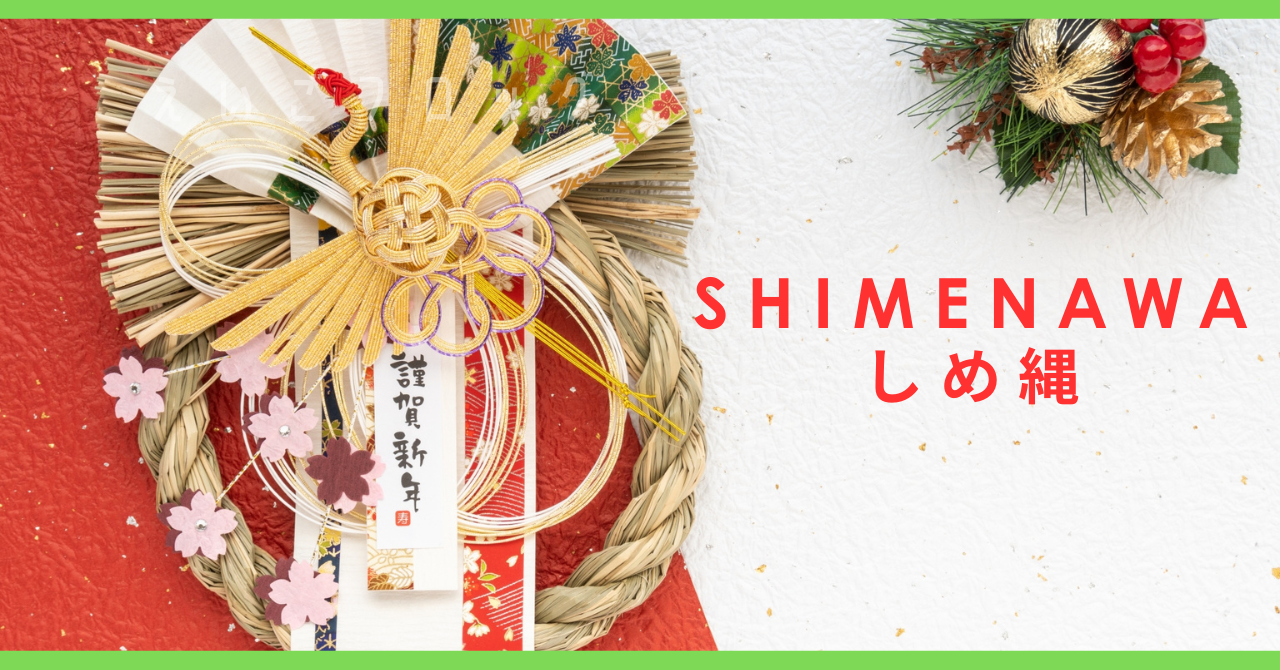
お正月や神社で見かける、縄に白い紙がついた飾りー「しめ縄(しめなわ)」。しめ縄は、神様のいる清らかな場所を示す大切な目印です。
Have you ever noticed ropes decorated with white paper at shrines or during the New Year in Japan? These are called shimenawa. Shimenawa are sacred ropes that mark purified spaces where deities are believed to reside.
しめ縄は、神聖な場所と日常の世界を区切るための縄です。神様が宿る場所、または神様を迎える場所に張られます。
Shimenawa is a rope used to separate sacred spaces from the ordinary world.
お正月には、年神様を迎えるため、家の玄関や神棚に飾られます。
During the New Year, shimenawa is placed at entrances or household altars to welcome Toshigami, the New Year deity.
しめ縄は、稲わらで作られるのが基本です。これは、稲作と深く結びついた日本の信仰を表しています。
Shimenawa is traditionally made from rice straw, reflecting Japan’s deep spiritual connection to rice cultivation.
しめ縄の主な構成 / Main Elements
しめ縄には、邪気を防ぎ、清らかな空間を保つという役割があります。つまり、「ここから先は神様の世界」というサインなのです。
Shimenawa is believed to keep away evil spirits and maintain a purified space. In other words, it serves as a sign that “beyond this point is the realm of the gods.
お正月のしめ縄は、年神様を迎える準備として玄関や神棚、門や柱などに飾られ、家全体を清めて神様を迎える意味があります。
New Year shimenawa is displayed at places such as the entrance, household altar, gates, or pillars to purify the home and prepare it for the visit of Toshigami.
年神様を詳しく知る What is Toshigami-sama? >>
しめ縄は、松の内(まつのうち)が終わる頃に外されます。松の内とは、年神様が家に滞在すると考えられているお正月期間のことで、地域によって多少異なりますが、一般的には1月7日頃まで、または1月15日頃までを指します。
Shimenawa is usually removed after Matsunouchi, the New Year period during which Toshigami is believed to stay in the home. Matsunouchi typically lasts until around January 7 or January 15, depending on the region.
役目を終えたしめ縄は、そのまま捨てるのではなく、感謝の気持ちを込めて、どんど焼きで焚き上げたり、神社に納めたりして手放すのが習わしです。これは、年神様を丁寧にお見送りするための大切な作法です。
After this period ends, the shimenawa is not simply thrown away; instead, it is respectfully released by burning it in a ritual fire called Dondoyaki or returning it to a shrine, as a way to express gratitude and properly send off the deity.
神社では、本殿や御神木に大きなしめ縄が張られています。これは、そこに神様が宿ることを示す印です。
Large shimenawa can be seen at shrines, often around sacred buildings or holy trees. It indicates that a divine presence resides there.
最近では、シンプルでモダンなデザインや、マンションなどの室内に飾りやすい小型サイズのしめ縄も増えており、それぞれのライフスタイルに合わせて選ばれるようになっています。しめ縄は、目に見えない「清らかさ」や「けじめ」を形にした、日本独自の文化であり、新しい年を迎える心構えを静かに教えてくれる存在と言えるでしょう。
Today, shimenawa has evolved to suit modern living spaces, with simple, modern designs and smaller versions made for apartments. It gives visible form to the invisible ideas of purity and renewal, standing as a uniquely Japanese tradition that gently reminds us how to welcome a new beginning.